
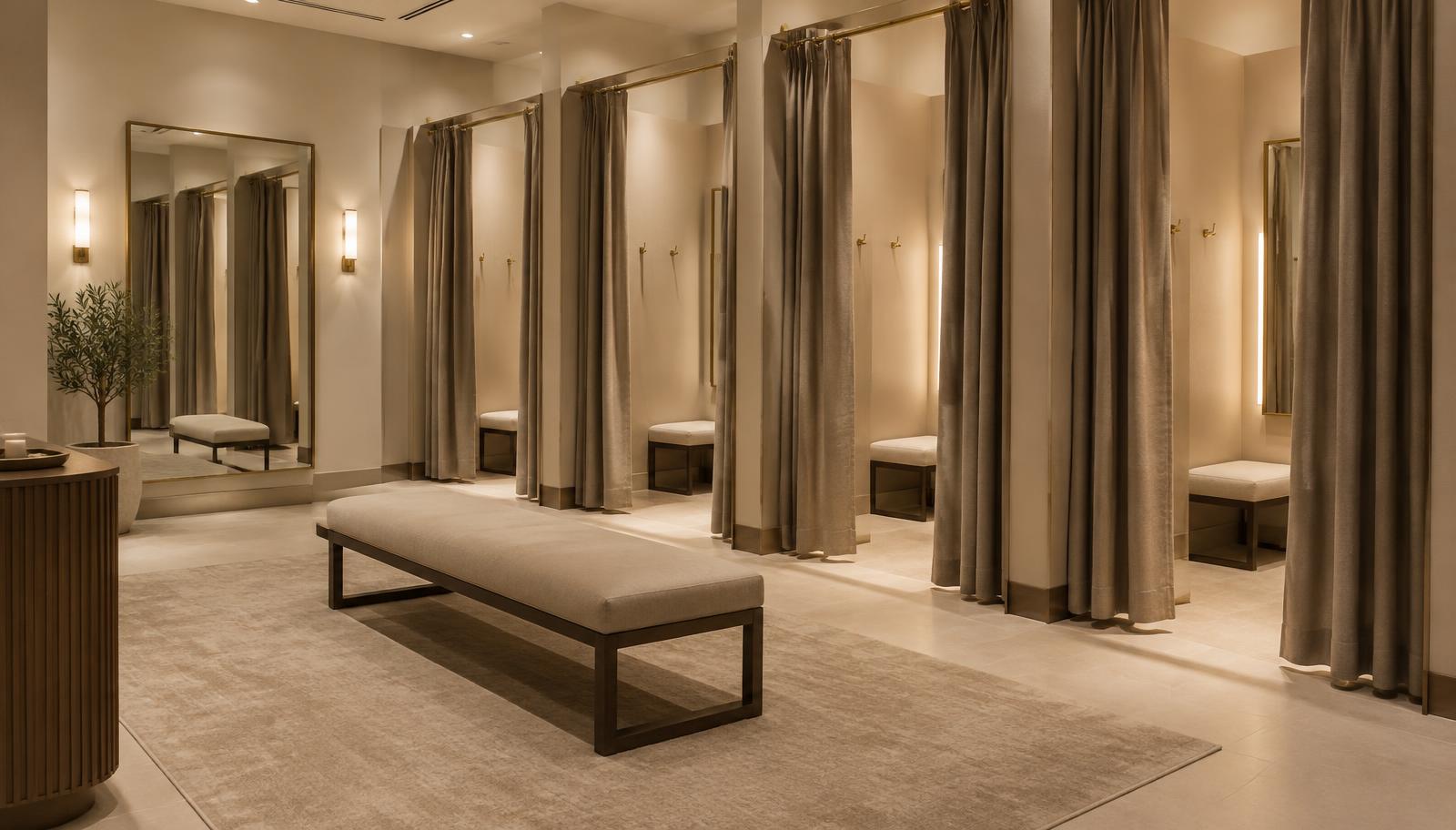
In New York City hospitality environments, the hotel lobby functions simultaneously as a primary threshold, an active thoroughfare, and an operational hub. Guests arrive from sidewalk conditions, pass through entry vestibules, approach reception desks, wait for elevators, and transition toward lounge seating or dining venues. Each of these zones presents distinct circulation behaviors and physical dynamics. When property operators and facility directors consider ambient scenting, hardware placement cannot be an afterthought. Installing diffusers without first analyzing foot traffic, doorway cycles, and layout configurations risks inconsistent fragrance levels across the floor.
A structured facility review evaluates physical layout, entrance patterns, and guest circulation before determining diffuser locations. Because smell is processed by the limbic system, the part of the brain tied to mood, emotion and memory, managing how an aroma greets visitors sets the tone for their stay. Careful spatial mapping helps maintain balanced, subtle scenting without over-saturating transient corridors or under-serving critical dwell areas.
Entrance Zones and Street-Level Dynamics
New York City hotels experience continuous entrance door cycles throughout the day. Revolving doors, sliding entryways, and double-door vestibules create frequent exchanges between exterior street air and the interior foyer. Positioning a diffuser too close to an active exterior doorway can cause fragrance to dissipate outdoors before establishing an ambient presence. Conversely, placing a standalone diffuser in a confined, unventilated vestibule may result in concentrated pockets that overpower incoming visitors.
During an on-site survey, facility managers should examine how exterior air drafts mix with the interior foyer. For hospitality operators interested in earlier background on mechanical air exchange, see our article on drafting an airflow brief for NYC hotel lobbies. By identifying the transition point where incoming street air settles into steady interior circulation, planning teams can position diffusion equipment where fragrance is gently carried into the main reception space rather than lost to the sidewalk.
Circulation Paths Versus Dwell Zones
A hospitality lobby features two distinct movement patterns: active circulation paths and static dwell zones. - Active circulation paths include entry corridors, paths between revolving doors and elevator banks, and connectors leading toward restrooms, luggage storage, or ballrooms. In these areas, guests move continuously. - Dwell zones include reception desks, concierge queues, waiting lounges, and seating areas. In these locations, guests remain stationary for minutes or hours.
Diffuser placement must reflect these functional differences. In dwell areas where guests wait for check-in or arrange transit, scent levels should remain subtle and consistent. As noted in hospitality research, "Ambient scent can reduce perceived waiting times [and] appears to result in a higher evaluation of service." (McDonnell). Delivering this benefit requires restraint. An intensity level that feels light in a drafty passageway might feel excessive to a guest seated for thirty minutes near the front desk. Mapping dwell zones separately from primary corridors ensures that diffusion schedules and equipment output match how guests use each section of the floor.
Practical Questions for the Initial Facility Survey
Mapping a facility before choosing hardware involves practical operational observations. Building managers, chief engineers, and scent specialists can evaluate several straightforward questions during a walkthrough: - Where do natural foot traffic bottlenecks occur during peak check-in and check-out windows? - How do guest movements shift between morning departures, afternoon arrivals, and late-evening lounge traffic? - Does the space rely on central ducted heating and cooling, or are certain architectural extensions served by ductless configurations? - Are there secondary portals, such as subterranean garage entries, luggage ramps, or adjoining public transit connections, that introduce separate air currents? - Where are service doors, housekeeping closets, and dining room passages located in relation to primary guest pathways?
Gathering these observations clarifies whether a lobby requires centralized ducted distribution, strategically positioned standalone diffusers, or a combination of both.
HVAC Cold-Air Diffusion Versus Standalone Equipment
Once circulation pathways and physical zones are understood, selecting between central ducted equipment and standalone diffusers becomes straightforward.
HVAC scenting with cold-air diffusion operates by converting fragrance oil into a dry micro-mist that is carried through HVAC ducts for even distribution across entire zones. Because the mist is dry, it leaves no residue and causes no damage to the ventilation system. It functions effectively across cool, fan, or heat settings. For the system to maintain continuous circulation, the HVAC fan must be set to ON rather than AUTO. An AUTO setting halts air movement whenever the thermostat reaches its temperature threshold, which interrupts scent delivery and leads to uneven fragrance levels throughout the day.
For historic properties, boutique hotels, or specialized amenity wings without central ducted access, standalone diffusers provide an effective alternative. Standalone units can be positioned along natural circulation paths to carry fragrance into seating alcoves or elevator vestibules without connecting to ductwork. The only maintenance required for cold-air diffusion systems is replacing the oil bottle when empty, making ongoing management simple for facility personnel.
Addressing Competing Odors in High-Traffic Hospitality Zones
In active hospitality environments, ambient scenting must often contend with competing odors. Street exhaust, damp coats on rainy days, rolling luggage, and proximity to dining rooms or lobby bars can introduce unwanted aromas. Simply diffusing fragrance over persistent odors produces a muddled environment. Odor neutralizing eliminates unpleasant odors rather than masking them.
Research highlights that "8 in 10 people say that cleanliness is the main factor that influences their perception of a hotel's values." (J.D. Power). When baseline odors are eliminated at the molecular level, an ambient scent can perform as intended. This principle of source-level odor elimination is standard across demanding sectors, such as healthcare environments, where maintaining clean air is critical. For dedicated commercial treatment targeting localized sources, property teams often coordinate through odor control services or explore solutions through Zent's commercial odor control sister brand, Luften (luften.net).
Zent's Systematic Five-Step Approach
To ensure diffusers are placed accurately according to building circulation and physical layouts, Zent follows a disciplined five-step approach: 1. Initial Consultation: Reviewing aesthetic preferences, property objectives, architectural layouts, and operational schedules. 2. Facility Survey by the Engineering Team: A free site survey that inspects mechanical layouts, entrances, ceiling dimensions, and foot traffic patterns. 3. System Design: Outlining precise diffuser locations, hardware selection (ducted cold-air diffusion or standalone units), and diffusion schedules. 4. Scent Development: Developing custom signature scents with renowned perfume designers, or selecting a fragrance from Zent's library. 5. Installation, Monitoring, and Servicing: Professional setup with on-site scent mapping, ongoing monitoring, and support from a dedicated Customer Care representative.
For residential hospitality operators or property executives interested in residential fragrance collections, Zent's sister brand Frave Home (fravehome.com) provides hotel-inspired home fragrance products.
Hospitality properties across Manhattan, Brooklyn, Queens, the Bronx, and expanding facilities in Staten Island and the tri-state area can select from three service plans: Full Service, Value Service, and Get & Scent. These plans include on-site and remote maintenance, backed by a guaranteed 24-hour response time via email or a dedicated hotline.
Scheduling a Facility Review
Successful scenting in New York City hotels depends on understanding how air and guests move through the space before any equipment is mounted or connected to ductwork. To schedule a free site survey with Zent's engineering team, call 212-222-0030, email info@zent.nyc, or submit your property details through our contact page.