
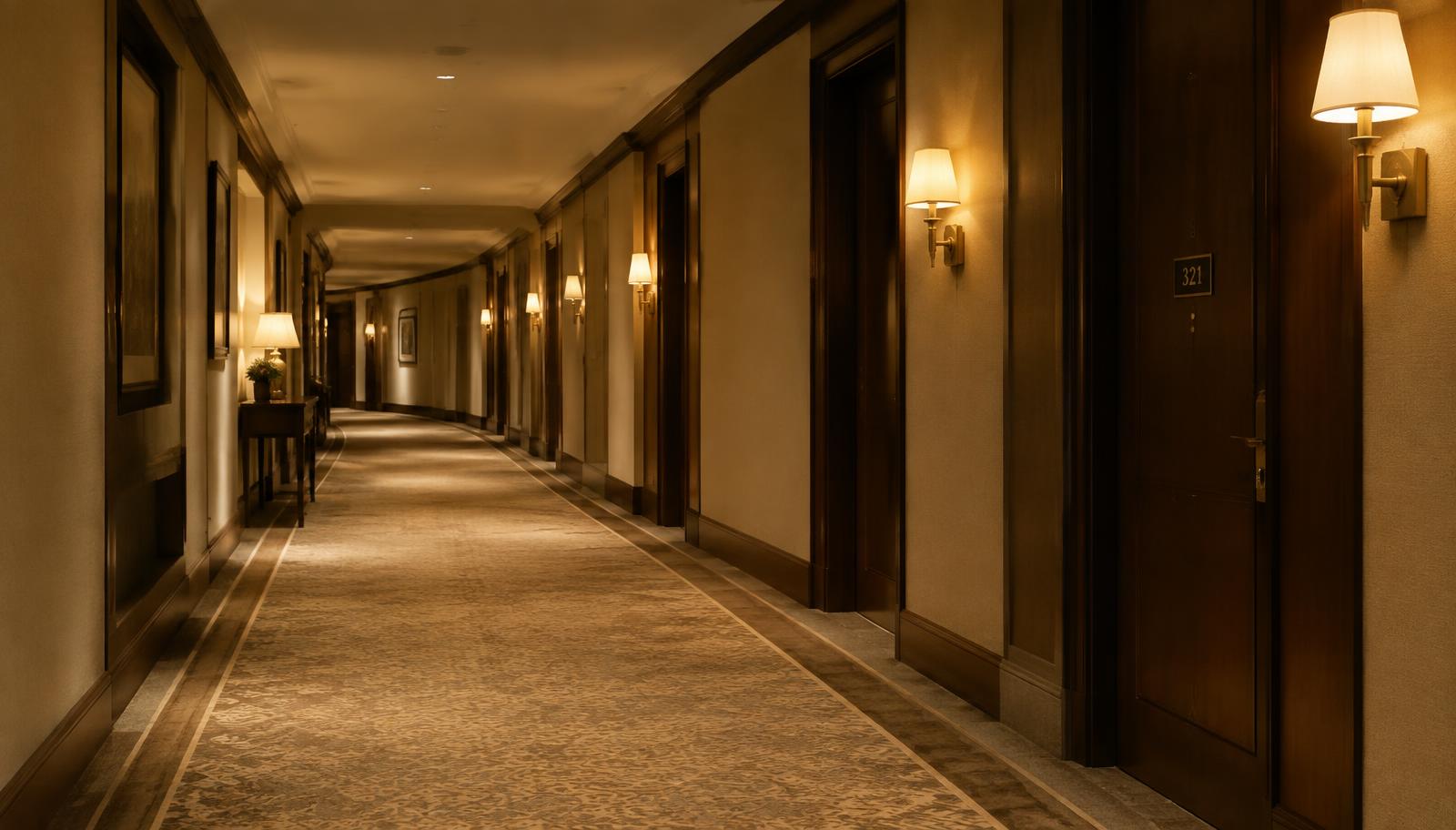
A hotel scenting plan starts with the spaces that guests actually use. A reception desk, a lobby seating area and a connected corridor may belong to the same arrival experience, but they are different places to review during a facility survey. Before choosing a fragrance or a diffuser, it helps to describe those spaces clearly.
Zent is a Brooklyn-based scent marketing agency serving New York City and the tri-state area. Its approach moves through consultation, facility survey, system design, scent development, and installation with monitoring and servicing. Preparing a simple airflow brief is a way to organize questions for that process. It is not a technical specification or a substitute for the engineering team's survey.
Start with the arrival spaces
Write down which parts of the property you would like to discuss. That might be the lobby and reception, a guest lounge, connected corridors, or an amenity floor. Keep the brief specific to your building rather than borrowing a plan from another property.
Consider where visitors enter, where they pause and which spaces connect to one another. These observations give the consultation a practical starting point. They do not establish how many diffusers are needed or what output the system should use; those decisions belong to the facility survey and system design.
For a property reviewing its arrival areas, Zent's hotel scent marketing page provides the broader context. The brief can then focus on the areas that matter to your own operation. If you want only the lobby considered, say so. If several floors are part of the conversation, list them separately.
Record what you know about central air
Zent uses HVAC scenting with cold-air diffusion. Fragrance oil is converted into a dry micro-mist and carried through the HVAC ducts for distribution. A hotel with central air can discuss this approach during the survey. Standalone diffusers are also available for spaces without central air.
Your preparation does not need to include technical calculations. Note which spaces have central air, which do not, and anything you would like the engineering team to check. If you are unsure whether connected spaces share the same system, leave that as a question rather than treating it as a fact.
The HVAC scenting guide explains the existing system approach. HVAC scenting works with cool, fan or heat settings, but the fan must be ON rather than AUTO for continuous circulation. Include your current fan setting in the discussion if you know it. The survey is the place to review how the proposed scenting hours relate to the building's operation.
Separate coverage questions from fragrance questions
Choosing where scent should be present is different from choosing the scent itself. A lobby brief can describe the areas under consideration without committing to a particular fragrance. This allows the system design and scent development stages to address their respective questions.
Ask whether HVAC diffusion or standalone units are appropriate for each space. Where central air is unavailable, the standalone option remains part of the conversation. Avoid deciding placement solely from the size of a room or from a photograph of another hotel. Zent's facility survey considers the actual space before system design.
Fragrance can be chosen from Zent's library, or a custom signature scent can be developed with renowned perfume designers. The signature scent page describes those choices. In the brief, explain the atmosphere you want to discuss and whether the property is considering a library fragrance or a custom direction. There is no need to invent scent names or assume a development schedule.
Include odor concerns as a separate item
If an unpleasant odor is part of the reason for the consultation, identify the affected area. Scent selection should not be used to avoid discussing that concern. Zent describes odor neutralizing as eliminating unpleasant odors rather than masking them.
The odor control page is useful preparation for this part of the conversation. A brief can distinguish between a desired arrival fragrance and a space where odor neutralizing needs to be considered. That distinction keeps the survey focused on the actual request instead of treating every concern as a fragrance problem.
Describe what you have noticed without assigning an unverified cause. The engineering team's facility survey is the next step in reviewing the space. Preparing questions is useful; promising a particular result before the survey is not.
Use the five-step approach to organize decisions
The initial consultation establishes what the property wants to discuss. Bring the list of spaces, the central-air questions and any odor concerns to that conversation. These are starting points, not requirements that every hotel must complete in the same way.
The facility survey gives the engineering team the opportunity to review the building. System design follows that review. Scent development addresses the fragrance choice, whether from the library or through a custom signature scent. Installation, monitoring and servicing complete the approach.
A useful brief keeps those stages distinct. It does not need to predict installation timing, equipment quantities or maintenance frequency. Instead, it can record which decisions are still open and who at the property should join the conversation. For a Manhattan property, the same preparation can support a discussion about a single lobby or several connected public areas.
Plan for servicing as well as installation
Zent's service plans are Full Service, Value Service and Get & Scent. Support includes email or a dedicated hotline, with a guaranteed 24-hour response time. On-site and remote maintenance are part of the existing service offering. Discuss which plan fits the proposed arrangement rather than assuming that every plan includes identical responsibilities.
For HVAC cold-air diffusion, the routine equipment maintenance described by Zent is replacing the fragrance oil bottle when empty. Ask how refills, monitoring and service communication will be handled for the property. The service plans page provides the existing plan information for that discussion.
Ongoing monitoring includes on-site scent mapping and a dedicated Customer Care representative. Your brief can note who should receive service communication and which areas should be included when the scent arrangement is reviewed. Keep it as a working description, not a promise about refill intervals or results.
Bring a clear brief to the consultation
A short list of spaces and questions is more useful than an unsupported technical specification. Record the areas under consideration, what you know about central air, the fragrance direction you want to discuss and any separate odor concerns. Leave unknowns clearly marked for the survey.
If the property includes spaces without central air, the earlier article on scenting older New York buildings offers further reading. To discuss your hotel's lobby and connected spaces with Zent, book a free site survey or call 212-222-0030.