
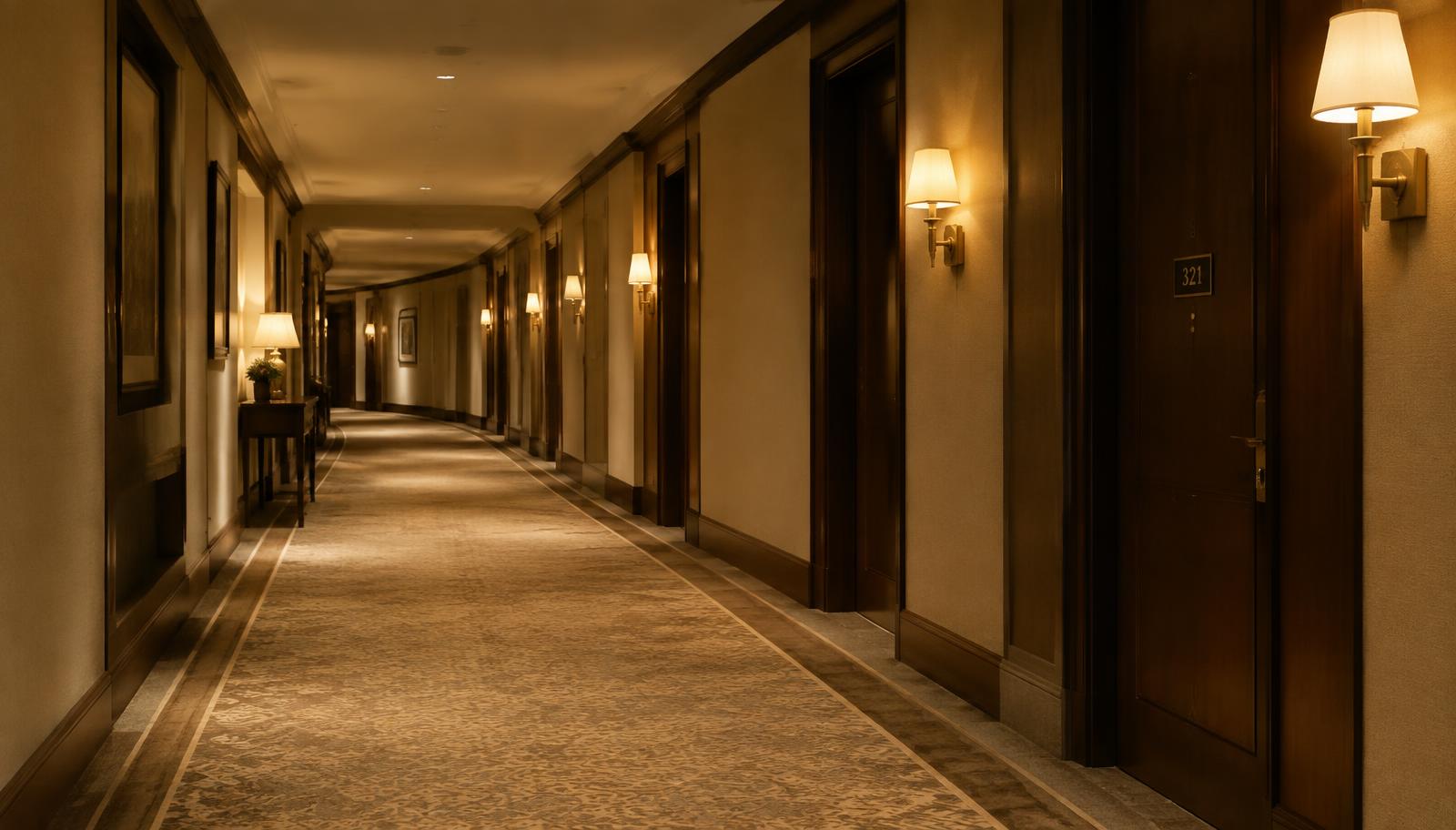
In New York City hospitality environments, the guest arrival experience depends heavily on subtle sensory cues. Smell is processed by the limbic system, the part of the brain directly tied to mood, emotion, and memory. Because of this physiological connection, a well-balanced ambient scent can shape how guests perceive comfort, hospitality standards, and service quality from the moment they enter the property. As researcher McDonnell noted, "Ambient scent can reduce perceived waiting times [and] appears to result in a higher evaluation of service."
Achieving a consistent, balanced ambient profile in high-traffic spaces like hotel lobbies requires more than selecting an appropriate fragrance. It requires precise synchronization between the scent delivery equipment and the building's mechanical ventilation. When diffusing scent through central ductwork, the schedule of the scenting hardware must align directly with the operating hours of the air handling fans. Understanding how HVAC settings interact with commercial scent diffusion helps facility managers and hospitality operators maintain seamless environmental standards throughout the day.
HVAC Cold-Air Diffusion and Airflow Requirements
Commercial HVAC scenting relies on cold-air diffusion technology. In this process, fragrance oil is converted into a dry micro-mist. This micro-mist is introduced into the ductwork, where the moving air stream carries it evenly throughout the designated zones. Because the micro-mist is dry, it leaves no residue and causes no damage to the ventilation system. The only routine maintenance required for the equipment is replacing the fragrance oil bottle when it becomes empty.
Cold-air diffusion systems operate effectively alongside cool, fan, or heat settings. However, distribution requires active airflow. For continuous circulation of the scent, the HVAC fan setting must be set to ON rather than AUTO.
When a fan is set to AUTO, the system only circulates air when the thermostat calls for active heating or cooling. Once the target temperature is reached, the fan shuts off. If the scent delivery unit continues to release micro-mist while the fan is dormant, the fragrance can collect within the ductwork rather than dispersing evenly into the lobby. Conversely, when the fan unexpectedly kicks back on, a sudden, concentrated surge of scent may enter the space. Setting the fan to ON guarantees that air moves constantly through the ducts, providing an uninterrupted carrier stream that disperses the micro-mist at a stable, predictable intensity.
Synchronizing Operating Schedules with Scenting Hours
Hotel lobbies do not maintain uniform occupancy throughout a 24-hour cycle. Peak arrival times, morning checkouts, afternoon lulls, and late-night check-ins present varying operational demands. Coordinating the scent delivery schedule with both guest activity patterns and mechanical ventilation timetables is essential for efficient facility management.
If a property chooses to scent only during active lobby hours—such as 7:00 AM to 11:00 PM—the HVAC fan must remain running continuously throughout that exact operational window. If the air handling system is programmed to cycle down or shift to intermittent fan operation during certain afternoon hours, the scent diffuser must be programmed to pause during those exact intervals. Running diffusion hardware without continuous fan support risks inconsistent delivery and wasteful oil consumption.
Properties operating across the boroughs, from boutique establishments in Brooklyn to larger hospitality assets in Queens, often coordinate their building management schedules to optimize air exchange. When planning scenting schedules, facility managers should map out:
- The exact hours the lobby air handlers are programmed for continuous fan operation.
- Daily check-in and checkout peaks where consistent fragrance presence is most critical.
- Transitional periods between heating, cooling, and ventilation-only modes.
- Nighttime airflow setbacks when scent delivery should be suspended.
For spaces that lack ducted ventilation or have isolated areas where the main air handling unit does not run continuously, standalone diffusers are available to serve areas without central air. A detailed comparison of these delivery methods is covered in our analysis of standalone vs HVAC scenting for NYC hotel lobbies.
Cleanliness, Odor Neutralization, and Air Quality
In hospitality environments, ambient scenting works hand in hand with environmental cleanliness. According to J.D. Power, "8 in 10 people say that cleanliness is the main factor that influences their perception of a hotel's values." When scenting is introduced into an area with competing odors—such as street exhaust, luggage transit, or adjacent dining facilities—attempting to cover those scents with heavy fragrance can create an unsettled sensory environment.
True odor management requires odor neutralizing, which eliminates unpleasant odors rather than masking them. Zent works alongside sister brand Luften (luften.net), which provides commercial odor control at the source, ensuring that baseline air quality is properly managed before fragrance delivery begins. Once the environment is neutralized, ambient fragrance can perform as intended, creating a fresh, welcoming atmosphere without competing against background odors. Similar odor control considerations apply across sensitive commercial sectors, including protocols applied within healthcare environments.
Practical Survey Considerations for Facility Managers
Determining the proper balance between mechanical air settings and scent delivery requires careful technical evaluation. Zent follows a structured five-step approach: an initial consultation, a facility survey conducted by the engineering team, system design, scent development, and professional installation, monitoring, and servicing.
During the facility survey, the engineering team evaluates several practical elements of the building's ventilation infrastructure:
- Does the air handling unit serving the lobby allow the fan to remain set to ON during all designated scenting hours?
- Are there shared return air pathways that connect the lobby to non-target areas, such as administrative back offices or luggage storage?
- Does the HVAC system transition between heating and cooling without shutting off the primary supply fan?
- Where within the supply ductwork should the cold-air diffusion injection point be installed to achieve balanced coverage across the entire floor plan?
- How will seasonal variations in thermal comfort affect overall air circulation patterns in the lobby?
During the scent development phase, properties can select an ambient profile from Zent's library or collaborate on custom signature scents developed with renowned perfume designers. For guests who wish to bring that sensory profile home, Zent's sister brand Frave Home (fravehome.com) provides hotel-inspired home fragrance collections.
Ongoing Monitoring and Servicing
Once the system design is finalized and the equipment is installed, maintaining alignment between airflow schedules and scent diffusion requires ongoing management. Zent provides on-site scent mapping to confirm that fragrance levels remain balanced across all corners of the lobby without pockets of over-saturation or low intensity.
Clients are supported by a dedicated Customer Care representative, ongoing system monitoring, and a guaranteed 24-hour response time for maintenance requirements. Ongoing support is handled via email or a dedicated hotline, with both on-site and remote maintenance available. Depending on property needs and internal engineering resources, organizations can select from three service tiers:
- Full Service: Complete end-to-end management, including regular oil refills, routine mechanical inspections, and full system calibration.
- Value Service: A balanced support plan offering scheduled servicing and technical assistance.
- Get & Scent: A streamlined plan for properties managing their own day-to-day operations while relying on Zent for equipment and fragrance supply.
Building managers with technical questions regarding air handling compatibility can explore answers to standard operational questions in our FAQ section.
Planning Your Lobby Scenting Strategy
Coordinating HVAC fan run times with commercial scent delivery is an engineering consideration that directly shapes the guest experience in NYC hotels. Ensuring that air handlers remain set to continuous circulation during scenting hours protects the HVAC infrastructure, optimizes fragrance oil usage, and prevents sudden spikes in fragrance intensity.
Zent is a Brooklyn-based scent marketing agency serving New York City and the tri-state area. To evaluate your property's ductwork and determine the proper operational setup for your space, schedule a free site survey with our engineering team by calling 212-222-0030, emailing info@zent.nyc, or reaching out through our contact page.