
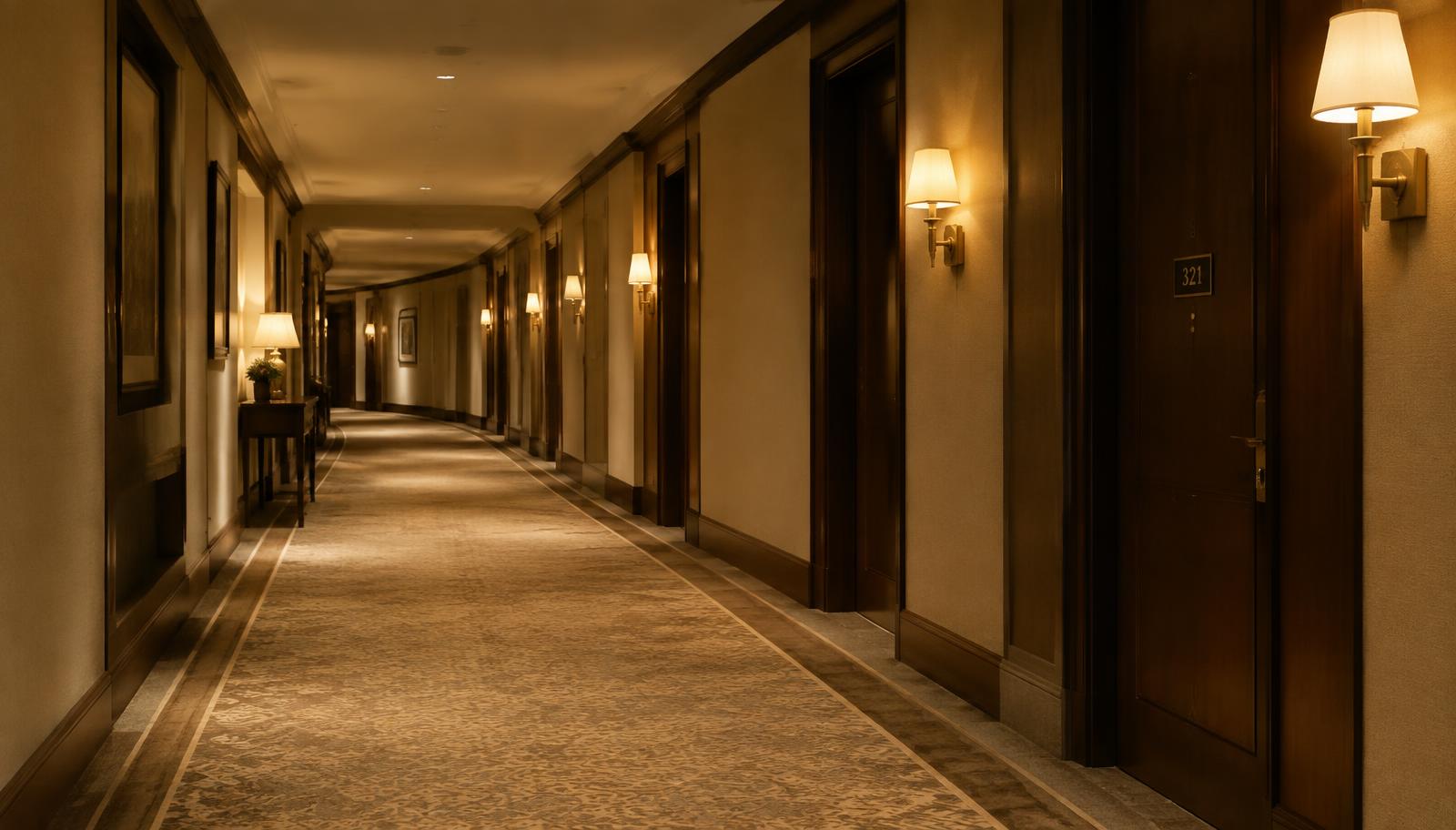
Hospitality groups managing multiple properties across New York City and the tri-state area face a distinct operational challenge when standardizing guest experience. While interior design, lighting, and sound can be adjusted through clear architectural guidelines, ambient scent often behaves unpredictably from one property to the next. A scent profile that feels balanced in a modern high-rise reception may present completely differently in a historic boutique lobby with varied air handling.
Maintaining fidelity to a single scent brief across a portfolio requires an understanding of building mechanics, baseline odors, and ongoing system management. Smell is processed by the limbic system, the part of the brain tied to mood, emotion, and memory. Because this sensory touchpoint directly shapes guest impressions, ambient scent must remain cohesive across every address in a brand portfolio. As researcher McDonnell noted, "Ambient scent can reduce perceived waiting times [and] appears to result in a higher evaluation of service." Achieving that benefit across varied real estate demands a systematic, multi-property execution plan.
Establishing a Neutral Baseline Across Diverse Buildings
A primary obstacle to brand-wide consistency is that every building carries its own background aroma. A Midtown property near high-traffic thoroughfares faces different ambient challenges than a waterfront hotel in Brooklyn or an airport-adjacent location in Queens. Ground-floor dining, subterranean kitchens, luggage storage rooms, and street-level drafts all contribute competing odors that alter how a signature fragrance is received.
Attempting to introduce an ambient scent over existing odors leads to compromised results. Effective portfolio planning relies on genuine remediation rather than heavy scenting. In commercial facilities, odor neutralizing eliminates unpleasant odors rather than masking them. Clearing competing compounds creates a blank canvas so the intended fragrance profile performs as formulated.
This approach is especially critical when hospitality spaces integrate high-turnover amenities directly off the main reception. When guest corridors connect lobbies to wellness centers or hotel spas, facilities teams must coordinate with specialized protocols like those used for fitness and beauty facilities. For commercial odor control targeted directly at the source, facility managers often coordinate remediation through specialized commercial resources such as Zent's sister brand, Luften (luften.net), before active scenting begins.
According to J.D. Power, "8 in 10 people say that cleanliness is the main factor that influences their perception of a hotel's values." When unpleasant background odors are thoroughly neutralized rather than masked, the incoming ambient scent reinforces standards of cleanliness and brand care across every hotel in the group.
Accounting for Mechanical Variations in Multi-Site Portfolios
Hospitality portfolios in New York City rarely feature identical mechanical equipment across all properties. A centralized scent brief must adapt to two primary scenarios: properties with modern central air handling and older properties operating with localized or decentralized systems.
For lobbies equipped with central ducted ventilation, HVAC scenting with cold-air diffusion serves as the standard commercial delivery method. In these systems, fragrance oil is converted into a dry micro-mist and carried through HVAC ducts for even distribution. This method introduces no moisture, causes no damage to the ventilation system, and works smoothly with cool, fan, or heat settings.
A critical operational requirement across all properties using HVAC diffusion is fan management. The system fan must be set to ON, rather than AUTO, to ensure continuous air circulation. If one property leaves its fan on AUTO while another runs continuous circulation, the scent brief will diffuse intermittently at the first location and steadily at the second, destroying portfolio consistency.
For older hospitality buildings or supplemental zones where duct access is unavailable, standalone diffusers are deployed. These units utilize the same cold-air diffusion technology, ensuring that the fragrance oil is converted into the same dry micro-mist as the ducted equipment. By coordinating standalone equipment in non-ducted spaces and HVAC integration in ducted zones, operators keep diffusion character identical across different structural footprints.
Standardizing the Facility Survey and System Design
Uniformity across properties cannot be achieved with a one-size-fits-all equipment list. Standardizing the scent brief requires standardizing the evaluation process at each location.
Zent applies a structured five-step approach across commercial properties: * Initial consultation to establish brand parameters and operational goals * Facility survey conducted by the engineering team to inspect mechanical layouts * System design tailored to the physical dimensions and airflow dynamics of each space * Scent development, ensuring the chosen composition performs properly in commercial volumes * Installation, monitoring, and servicing to maintain long-term balance
For facility directors managing multi-unit portfolios, reviewing key survey criteria is an essential step. Reviewing hotel lobby facility surveys: key questions to ask can help internal teams prepare their mechanical data before engineering inspections begin.
During the system design phase, on-site scent mapping is performed for each individual lobby. Scent mapping evaluates air dispersion paths, doorway drafts, and guest dwell zones. This ensures that whether a lobby features double-height ceilings or a compact vestibule, equipment output is calibrated so guests experience the exact same scent intensity upon arrival.
Selecting and Formatting the Portfolio Fragrance
Hospitality brands typically approach scent selection in one of two ways: 1. Developing custom signature scents developed with renowned perfume designers to establish proprietary brand identity. 2. Selecting an established, complex profile from Zent's commercial library.
Whichever route a brand selects, portfolio uniformity requires using the exact same oil formulation across every site. Fragrance oils behave differently based on temperature and air volume; using verified commercial formulations ensures that notes do not shift between properties.
For operators seeking to extend their hospitality brand beyond the physical lobby, consistent fragrance profiles can also bridge commercial and personal environments. Hospitality groups frequently coordinate with retail fragrance extensions such as Frave Home (fravehome.com), which specializes in hotel-inspired home fragrance, allowing guests to purchase the property's sensory identity for personal use.
Unified Maintenance and Centralized Care Plans
Even a carefully designed scent installation will falter across locations if routine maintenance is decentralized. If one hotel allows diffusion oil reservoirs to run dry while another over-saturates the space, brand perception fractures.
Cold-air diffusion systems require minimal day-to-day intervention: the only maintenance is replacing the oil bottle when empty. However, scheduling those replacements across multiple boroughs requires reliable oversight.
Zent offers three structured service plans to match varying operational styles: * Full Service: Complete turnkey management with regular on-site maintenance, fluid replenishment, and equipment audits. * Value Service: A balanced operational plan combining scheduled support with flexible facility team involvement. * Get & Scent: Equipment provision with scheduled deliveries for internal facility teams handling daily operations.
To prevent downtime across busy properties, all plans feature a guaranteed 24-hour response time. Facility teams can request support by email or through a dedicated hotline. System oversight includes both on-site and remote maintenance, supported by a dedicated Customer Care representative who manages account continuity across the entire property roster.
Maintaining Standards Across New York Properties
A unified scent brief elevates hospitality portfolios by reinforcing brand recognition at every arrival. Achieving that consistency across New York City requires addressing the mechanical reality of each building, clearing competing odors at the source, and establishing centralized maintenance protocols.
To evaluate your portfolio's lobbies or to schedule a free site survey with our engineering team, reach out via our contact page. You can also contact Zent directly at our Brooklyn office by calling 212-222-0030 or emailing info@zent.nyc.