
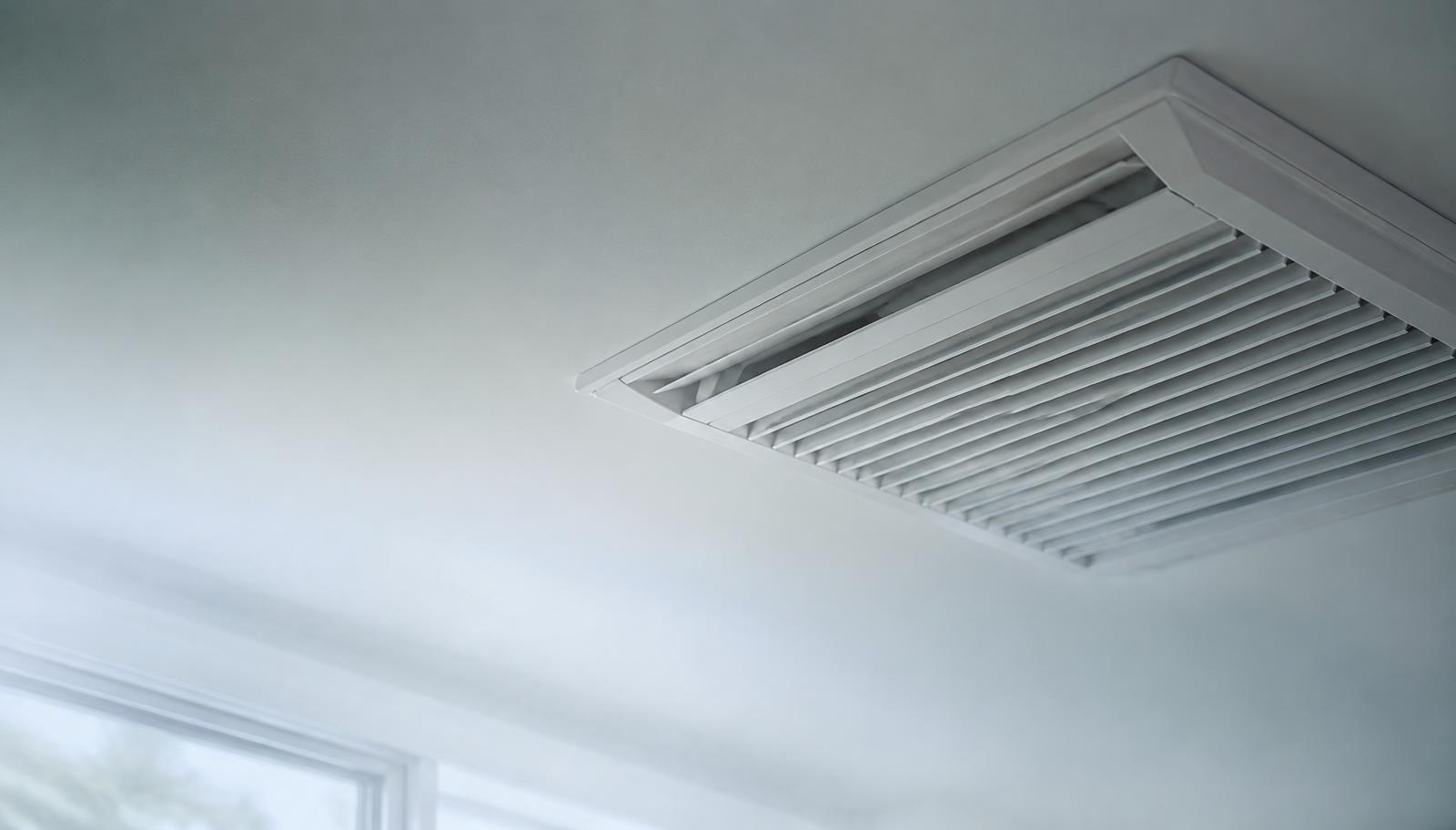
When evaluating ambient scent delivery for a commercial property, building managers and business owners frequently ask about operational workload. Facility teams manage extensive mechanical, electrical, and plumbing tasks every day; introducing another piece of equipment requires a clear understanding of labor, technical oversight, and hardware upkeep.
A properly engineered scent delivery system does not add complicated mechanical routines to your operations. In commercial environments, ambient scenting relies on cold-air diffusion. Fragrance oil is converted into a dry micro-mist and carried through HVAC ducts for even distribution throughout the target zones. Because the fragrance oil is diffused as a dry mist rather than a heated vapor or wet aerosol, it leaves no residue and causes no damage to the ventilation system.
Consequently, the physical maintenance requirements of the hardware are minimal. For day-to-day operations, the only recurring physical maintenance is replacing the oil bottle when it is empty.
Understanding Cold-Air Diffusion and HVAC Mechanics
To understand why maintenance remains simple, it helps to review the relationship between the diffuser and the building's climate controls. Cold-air diffusion relies on air movement within the mechanical ductwork to carry fragrance particles throughout the space.
The system operates alongside standard building climate settings: * Cool settings * Fan settings * Heat settings
For continuous circulation, the HVAC fan setting must be set to ON rather than AUTO. When a thermostat is set to AUTO, the air circulation shuts down as soon as the temperature setpoint is reached. Setting the fan to ON maintains steady airflow through the ducts, allowing the dry micro-mist to disperse evenly throughout the designated coverage zones.
Because the micro-mist operates as a dry airborne suspension, it travels through ductwork without condensing on interior duct walls, cooling coils, or heating elements. This eliminates the need for duct cleaning or specialized component maintenance tied to the scent hardware.
Standalone Units for Non-Ducted Spaces
Not every commercial property features ducted air handling. Standalone diffusers are available for spaces without central air. These units operate on the same cold-air diffusion principles, converting fragrance oil into a dry micro-mist that discharges directly into the ambient environment.
Just like ducted equipment, standalone diffusers do not leave damp residues on surrounding surfaces, walls, or fixtures. The operational maintenance for standalone units is identical to HVAC-connected models: staff or service technicians simply replace the fragrance oil bottle once it is depleted.
Odor Elimination Versus Scent Distribution
Facility management often involves addressing unwanted ambient scents before or alongside introducing an intentional scent profile. True odor control relies on odor neutralizing, which eliminates unpleasant odors rather than masking them.
Addressing odors is critical to how visitors judge an environment. As industry research notes, "Over 80% of adults indicated that odor contributed to their perception of an unsanitary space." (CleanLink).
For facility managers handling complex source odors, Zent works alongside specialized sister brands. Luften (luften.net) provides commercial odor control at the source, resolving persistent waste, plumbing, or industrial smells. For residential or boutique hospitality environments seeking consumer extensions, Frave Home (fravehome.com) provides hotel-inspired home fragrance. When foul odors are eliminated at the molecular level rather than covered up, scent delivery systems operate at peak efficiency with standard oil replacement cycles.
The Five-Step Implementation Process
To keep ongoing maintenance predictable, the initial deployment must be technically sound. Scenting systems fail or require excessive troubleshooting only when installed without proper facility engineering. Zent handles implementation through a structured five-step approach:
- Initial consultation: Defining the scope of the project, zone requirements, and functional objectives.
- Facility survey by the engineering team: An on-site evaluation of duct layout, air handling units, square footage, airflow patterns, and mechanical access points. Facility managers can review our guide on what a commercial scent site survey covers step-by-step to see how mechanical systems are analyzed.
- System design: Selecting appropriate hardware, mapping dispersion volumes, and determining whether HVAC integration, standalone diffusers, or a combination of both will provide coverage.
- Scent development: Selecting a scent chosen from Zent's library or developing custom signature scents developed with renowned perfume designers.
- Installation, monitoring, and servicing: Mounting the equipment, connecting to air handlers where appropriate, setting distribution schedules, performing on-site scent mapping, assigning a dedicated Customer Care representative, and establishing ongoing monitoring.
On-site scent mapping ensures that the concentration of fragrance remains balanced across all areas, eliminating strong pockets near supply vents and weak spots in perimeter zones.
Service Plan Structures
Maintenance responsibilities depend on the service tier selected by the business. Zent offers three primary service plans to accommodate different operational models:
- Full Service: Designed for businesses that want a turnkey solution with zero internal labor. The Zent team handles all fragrance bottle replacements, system checks, and seasonal adjustments.
- Value Service: A shared operational model providing professional oversight, technical support, and scheduling assistance while building staff handle basic bottle swaps.
- Get & Scent: A streamlined plan for facility teams that prefer to manage unit refills internally while relying on Zent for hardware provisioning, fragrance refills, and remote technical support.
Under all plans, technical support is available by email or dedicated hotline. Zent guarantees a 24-hour response time for technical inquiries, ensuring that mechanical adjustments or operational questions are resolved promptly. Support encompasses both on-site and remote maintenance, depending on the nature of the service agreement and the configuration of the equipment.
Scenting Across Commercial Sectors
The operational demands on commercial scent hardware vary by environment. In high-traffic retail environments, consistent ambient fragrance helps create an inviting, comfortable customer journey. In corporate offices, mixed-use commercial buildings, or properties throughout Queens and the broader tri-state area, facility directors prioritize reliable mechanical uptime that does not interrupt daily building schedules.
Research shows that ambient conditions have a direct impact on customer perception. As noted by academic researchers, "Ambient scent can reduce perceived waiting times [and] appears to result in a higher evaluation of service." (McDonnell).
Because smell is processed by the limbic system, the part of the brain tied to mood, emotion, and memory, subtle and balanced scent delivery has an immediate effect on human perception. Ensuring steady, balanced diffusion through regular bottle replacement keeps the sensory profile stable without overwhelming occupants.
System Oversight and Refill Cycles
Because cold-air diffusion equipment contains no heating elements, pumps, or atomizing nozzles requiring frequent replacement, the operational checklist for building engineers remains straightforward:
- Verify that the HVAC fan setting remains set to ON for continuous circulation.
- Check fragrance oil levels periodically or monitor notifications from your dedicated Customer Care representative.
- Replace empty fragrance bottles with the designated custom signature scent or library selection.
- Contact technical support via email or the dedicated hotline if mechanical airflow adjustments are made to the primary air handling units.
When building systems undergo seasonal balancing or duct modifications, Zent's ongoing monitoring and support options ensure the scent equipment is recalibrated to match the new airflow metrics.
Getting Started with Zent
Zent is a Brooklyn-based scent marketing agency serving New York City and the tri-state area. We engineer ambient scent systems to integrate seamlessly into existing mechanical infrastructures without creating labor burdens for on-site personnel.
To evaluate your building's HVAC layout and review hardware integration options, schedule a free site survey. Contact our technical team by calling 212-222-0030, emailing info@zent.nyc, or submitting an inquiry through our contact page.