
Managing Scent Across Hospitality Environments
Smell is processed by the limbic system, the part of the brain tied to mood, emotion and memory. In high-density hospitality environments across New York City and the surrounding tri-state area, scent plays an operational and psychological role in how guests navigate and assess physical spaces. When a guest steps off the street into a hotel, ambient conditions form immediate baseline impressions regarding property standards, cleanliness, and overall service.
Managing scent in a commercial property requires technical coordination between HVAC equipment, spatial layout, and scent delivery systems. Rather than relying on superficial topical sprays, modern hospitality facilities use engineered diffusion systems to maintain consistent, subtle scent levels across diverse zones, including ground-floor lobbies, guest corridors, and specialized amenity floors.
Scenting Hotel Lobbies: High-Traffic Entrances and Front Desks
Hotel lobbies balance heavy pedestrian traffic, continuous exterior door movement, and fluctuating occupancy throughout the day. Reception desks, waiting lounges, bell stands, and elevator banks share air circulation with street-level entrances. These spatial dynamics create significant dilution and uneven airflow if scent delivery is not correctly engineered.
According to McDonnell, "Ambient scent can reduce perceived waiting times [and] appears to result in a higher evaluation of service." For hotel operators managing peak check-in windows, dispersing a uniform ambient fragrance can modulate guest perception during inevitable operational delays at the front desk.
Lobbies are typically serviced via existing HVAC ducts using cold-air diffusion. In this process, fragrance oil is converted into a dry micro-mist and carried through HVAC ducts for even distribution. Because the fragrance oil is converted into a dry micro-mist, there is no damage to the ventilation system and no wet residue inside duct walls. Scent options can include an ambient selection chosen from Zent's library or custom signature scents developed with renowned perfume designers to align with the architectural tone of the property.
Guest Corridors and Odor Neutralizing
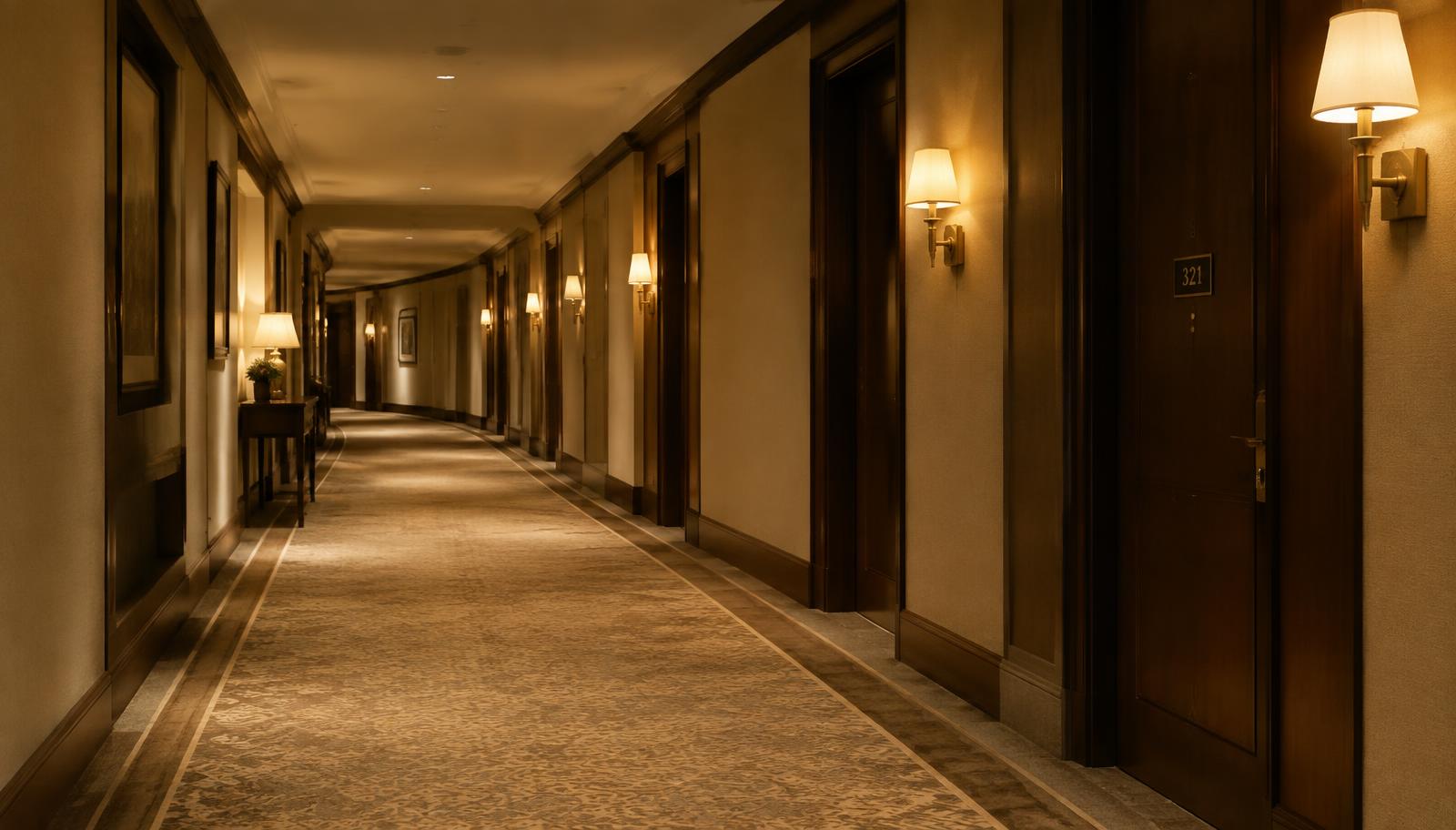
Corridors present a different mechanical challenge. These enclosed spaces connect hundreds of guest rooms, housekeeping carts, and service elevators. Cooking aromas from in-room dining, luggage transit, housekeeping operations, and variable humidity levels can compromise corridor air quality.
According to CleanLink, "Over 80% of adults indicated that odor contributed to their perception of an unsanitary space." In hospitality properties, addressing background odors is essential to maintaining property standards.
Rather than masking unwanted scents, effective air management relies on odor neutralizing that eliminates unpleasant odors rather than masking them. Zent works alongside sister brand Luften (luften.net), which provides commercial odor control at the source, ensuring baseline air quality issues are resolved. Building operators managing complex facilities can review dedicated odor control protocols to treat persistent localized odors in service corridors and back-of-house zones.
For continuous air circulation throughout corridor ductwork, the HVAC system can operate under cool, fan, or heat settings. However, building engineers must set the supply fan to ON rather than AUTO. The AUTO setting only runs the fan during active heating or cooling cycles, causing scent delivery to stop when thermal setpoints are satisfied. Setting the fan to ON guarantees uninterrupted air movement and balanced micro-mist distribution along the entire corridor floor plate.
Amenity Floors: Fitness Centers, Lounges, and Meeting Spaces
Amenity levels serve distinct functional purposes and demand targeted scenting configurations. A fitness center, a quiet co-working lounge, an executive conference room, and a subterranean spa each feature separate airflow parameters and guest expectations. Similar to scent requirements found in modern offices, hotel business lounges and meeting rooms require balanced, subtle scenting that supports focus without overwhelming occupants during long sessions.
When amenity floors possess dedicated air handling units, HVAC diffusion delivers an even profile across the entire square footage. For specialty rooms, historical structures, or spaces without central air, standalone diffusers are available. These standalone units utilize the same cold-air diffusion technology, atomizing fragrance oil into a dry micro-mist directly into the occupied space without requiring connection to central ductwork.
Properties that coordinate fragrance across distinct operational seasons can review commercial seasonal scenting strategy and execution to plan fragrance profiles that complement varying seasonal ambient conditions.
Engineering and Deployment: The Five-Step Approach
Integrating scent into complex commercial mechanical systems requires a structured engineering workflow. Zent implements a five-step approach designed specifically for facility directors and property managers:
- Initial consultation: Clarifying operational priorities, footprint parameters, target zones, and functional requirements for lobbies, corridors, and amenity spaces.
- Facility survey by the engineering team: A complimentary on-site evaluation of the building mechanical equipment, including duct layout, air handling units, air exchange rates, and potential locations for standalone diffusers.
- System design: Specifying equipment placement, diffuser capacity, and programming schedules to ensure the micro-mist operates in harmony with building air distribution.
- Scent development: Selecting an ambient profile from Zent's library or engineering custom signature scents developed with renowned perfume designers.
- Installation, monitoring and servicing: Deployment by technicians, including on-site scent mapping to confirm even dispersal without hot spots, assigning a dedicated Customer Care representative, and managing ongoing monitoring.
Service Plans and Mechanical Maintenance
Hospitality engineering teams manage expansive preventive maintenance schedules and cannot spare labor for complex fragrance maintenance. Cold-air diffusion minimizes facility workload: the only maintenance is replacing the oil bottle when empty.
To accommodate varied operational staffing models, Zent provides three service tiers:
- Full Service: Complete ongoing management, including scheduled oil bottle replenishment, hardware adjustments, on-site scent mapping reviews, and equipment upkeep handled entirely by Zent technicians.
- Value Service: A balanced hybrid model providing structured technical oversight and routine service support for properties with on-site maintenance staff.
- Get & Scent: A streamlined program designed for properties that prefer internal replenishment while utilizing commercial-grade hardware and remote engineering guidance.
All service plans include on-site and remote maintenance, support by email or a dedicated hotline, and a 24-hour response time guaranteed. For properties whose guests wish to bring the hotel sensory experience home, Zent coordinates with sister brand Frave Home (fravehome.com), which offers hotel-inspired home fragrance products.
Regional Coverage and System Evaluation
Operating from Brooklyn, Zent services properties throughout New York City and extending into surrounding regional corridors, including hospitality developments in New Jersey and across the tri-state area.
Building engineers and general managers interested in evaluating HVAC cold-air diffusion or scheduling a free site survey can contact our engineering team. Contact Zent by phone at 212-222-0030, by email at info@zent.nyc, or submit an inquiry through our contact form.