
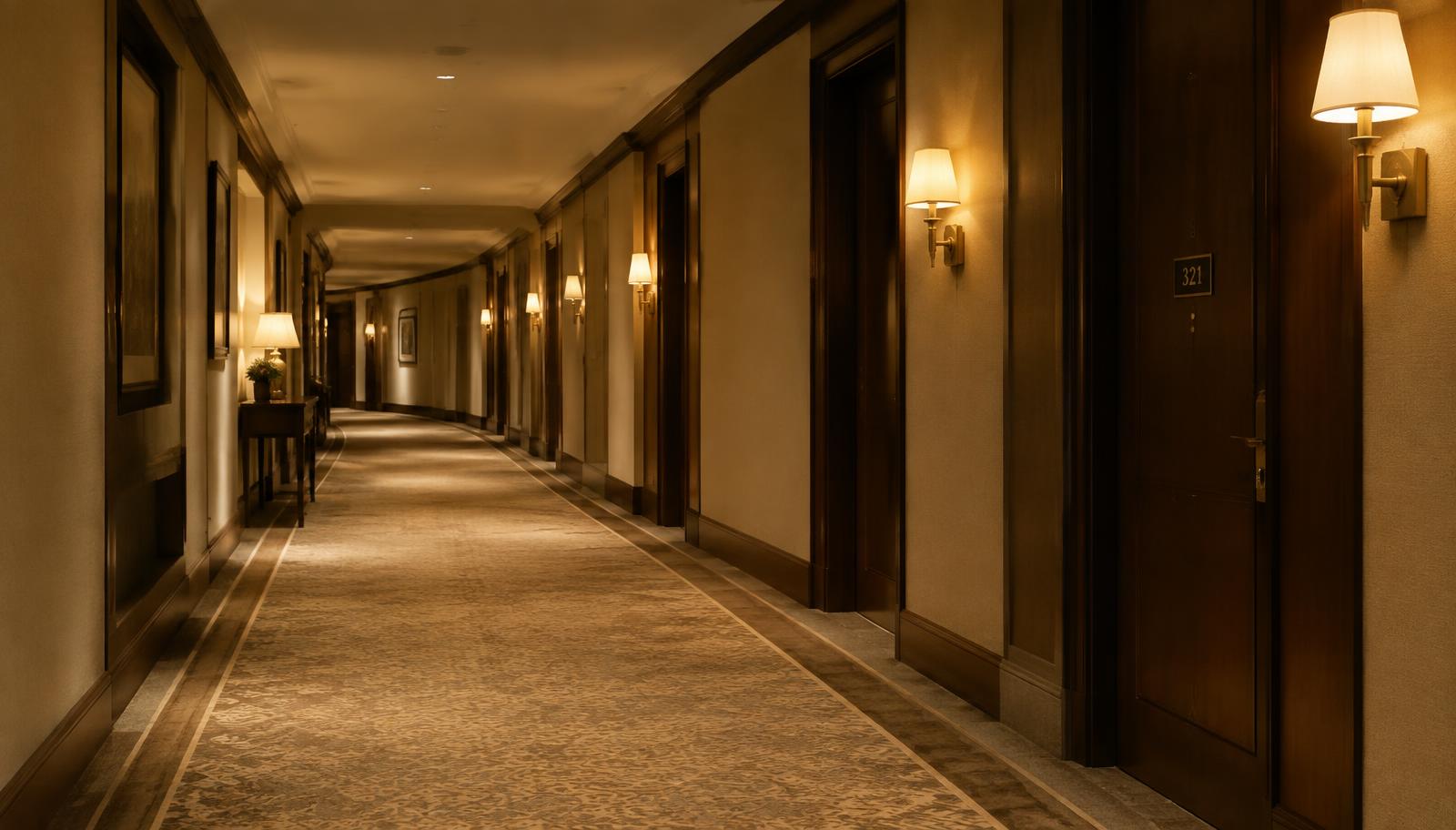
In a New York City hotel lobby, the arrival experience unfolds within seconds. Guests move from bustling city streets into an interior environment that must instantly convey hospitality, professionalism, and care. Because smell is processed by the limbic system—the part of the brain directly tied to mood, emotion, and memory—ambient scent plays a central role in framing that initial impression.
As research indicates, "Ambient scent can reduce perceived waiting times [and] appears to result in a higher evaluation of service." (McDonnell)
Achieving consistent, balanced ambient diffusion across a complex hospitality space requires more than placing an off-the-shelf unit in a corner. It requires a documented scent brief that bridges the gap between creative brand goals and building engineering. Based in Brooklyn and serving properties across New York City and the tri-state area, Zent structures every deployment through a five-step approach: initial consultation, facility survey by the engineering team, system design, scent development, and installation, monitoring, and servicing.
Documenting each phase ensures that property managers, facility engineers, and hospitality directors maintain a clear operational standard over the life of the installation.
Step 1: The Initial Consultation and Space Objectives
The scent brief begins with an intake consultation to define the scope and purpose of the ambient program. During this stage, facility operators and brand managers identify the functional zones within the lobby, average foot traffic, guest dwell times, and the overarching atmosphere the property wishes to cultivate.
Much like managing air quality and ambient perception in corporate environments or high-density /industries/offices, hotel spaces must account for continuous guest movement, open entrance doors, and adjacent service zones. The consultation clarifies whether the hotel intends to deploy a pre-formulated ambient profile chosen from Zent's library or invest in a custom signature scent developed in collaboration with renowned perfume designers.
The initial consultation also catalogs any underlying environmental challenges. Scent cannot perform effectively if it is used to mask underlying issues. Odor neutralizing eliminates unpleasant odors rather than masking them, providing a clean foundation for ambient fragrance. For commercial hospitality spaces with severe odor sources—such as waste storage, service corridors, or heavy culinary exhaust—sister brand Luften (luften.net) specializes in commercial odor control at the source, allowing the lobby program to focus purely on ambient hospitality.
Step 2: Facility Survey by the Engineering Team
Once programmatic goals are outlined, the scent brief records the technical parameters gathered during an on-site facility survey conducted by the engineering team. Zent offers a free site survey to inspect the building's physical layout and mechanical systems.
This technical survey documents several critical items: * Central HVAC access: Technicians inspect mechanical closets and duct paths to evaluate whether /hvac-scenting is viable for the lobby zones. * Standalone requirements: In older properties, historic structures, or spaces without central air access, standalone diffusers are specified to cover target zones. * Mechanical operational modes: The survey verifies how heating and cooling fans operate. For HVAC cold-air diffusion, the supply fan must be set to the ON position rather than AUTO to ensure continuous circulation. The AUTO setting cycles the circulation off when target temperatures are reached, interrupting scent delivery. Scent diffusion functions properly across cool, fan, or heat settings as long as the fan remains running. * Air volume and architectural barriers: Surveyors measure ceiling heights, open mezzanine levels, revolving entrance doors, elevator shafts, and corridor transitions.
Whether evaluating a multi-story atrium in Midtown Manhattan or a boutique property in /nyc/staten-island, the survey establishes the mechanical baseline needed to deliver consistent scenting without over-saturating specific pockets of the lobby.
Step 3: System Design and Scent Mapping
The third section of the scent brief translates survey findings into a detailed engineering and dispersion plan. System design centers on cold-air diffusion technology. In this process, liquid fragrance oil is converted into a dry micro-mist and carried through HVAC ducts for even distribution throughout the target space. Because the mist is dry, it leaves no residue and causes no damage to the ventilation system.
During system design, engineers perform on-site scent mapping. This maps out exact equipment locations, injection points in the supply ducts, and diffusion schedules aligned with lobby occupancy cycles. Scent mapping ensures that high-dwell spaces, such as reception desks and lounge seating, receive a balanced, subtle presentation.
Guest comfort is a primary design factor. When planning output levels, building teams often review operational guidelines such as /blog/fragrance-sensitivities-in-nyc-hotel-scenting to ensure delivery remains understated and calibrated.
A disciplined design directly supports guest confidence, especially given that "8 in 10 people say that cleanliness is the main factor that influences their perception of a hotel's values." (J.D. Power)
Step 4: Scent Development and Selection
With hardware specifications established, the brief documents the scent selection. Hospitality operators decide between two primary approaches: selecting an established formulation from Zent's library or commissioning a custom signature scent.
When developing a custom scent, the brief records the aesthetic direction established with renowned perfume designers. The documentation notes the primary olfactory notes, the emotional tone of the blend, and how the fragrance behaves across different seasons and operational temperatures.
For properties looking to extend their on-site atmosphere beyond the lobby, sister brand Frave Home (fravehome.com) provides hotel-inspired home fragrance products, allowing hotels to translate their signature scent into guest-facing amenities or retail collections.
Step 5: Installation, Servicing Plans, and Monitoring
The final section of the brief outlines post-installation protocols, scheduling, and long-term care. Cold-air diffusion systems require minimal mechanical intervention; the only regular maintenance is replacing the oil bottle when empty. However, consistent fragrance delivery requires disciplined oversight.
Zent structures ongoing support around three distinct service plans documented in the brief: * Full Service: Complete, hands-off management where Zent technicians handle regular on-site oil replacements, equipment inspections, and system adjustments. * Value Service: A balanced maintenance plan pairing scheduled technical visits with proactive system support. * Get & Scent: A streamlined option for properties whose on-site facilities staff manage bottle replacements while Zent provides hardware and technical guidance.
Every installation includes ongoing monitoring, access to on-site and remote maintenance, and a dedicated Customer Care representative assigned to the property. Zent backs all service agreements with a guaranteed 24-hour response time, with support accessible via email or a dedicated hotline.
Maintaining Consistency Over Time
Documenting every detail from the initial consultation through system design and routine maintenance ensures that an ambient scent program remains consistent, reliable, and invisible from a mechanical standpoint. A thorough scent brief serves as an operational manual that hospitality teams, building engineers, and facility directors can reference through seasonal shifts, renovations, and staff changes.
To schedule a free site survey for your property or begin drafting your scent brief, contact Zent at info@zent.nyc or call 212-222-0030.